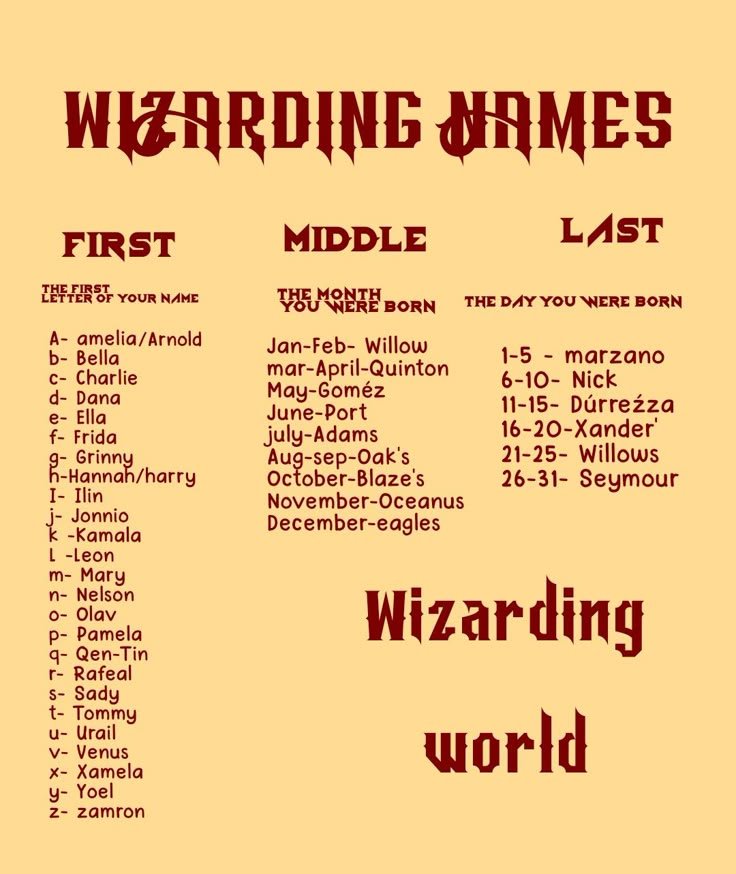
Ever wondered what power lies hidden in a name, especially when that name belongs to a wizard? From the arcane depths of ancient lore to the bustling halls of Hogwarts, a wizard's moniker is more than just a label—it's a declaration, a destiny, a whisper of magic itself. Understanding the Meanings and Origins of Wizarding Names isn't just a fun exercise; it’s an essential part of truly appreciating the fabric of fantasy worlds and crafting compelling characters of your own.
A well-chosen wizard name can tell tales of ancient lineage, hint at untold power, or even foreshadow a character's magical specialization. It's a key to their past, present, and the path they're destined to walk.
At a Glance: Crafting Your Wizarding Name
- Beyond Sound: A wizard's name often carries deep meaning, hinting at their magical abilities, personality, or origins.
- Mythology & History: Draw inspiration from ancient cultures, legends, and historical figures for authentic roots.
- Elemental & Nature: Connect names to natural forces like fire, ice, or specific trees for thematic power.
- Purpose-Driven: Consider if the name should evoke mystery, wisdom, darkness, or light.
- Mix & Match: Combine elements from different sources to forge truly unique and memorable names.
Why a Wizard's Name Carries Weight
Imagine Gandalf without his distinctive name, or Merlin known by a generic tag. It just doesn't resonate the same way, does it? A wizard's name is a fundamental part of their identity, often imbued with a sense of purpose, power, or even prophecy. It's the first hint of their arcane prowess, their alignment, or the very essence of their magic.
Whether you’re conjuring a character for a D&D campaign, sketching out a story, or simply indulging a daydream, the name you choose will significantly define their persona. It’s an act of creation in itself, almost a spell cast to bring them to life.
Decoding the Ancient Roots: Where Wizarding Names Truly Begin
The most resonant wizarding names often tap into languages and histories far removed from our everyday speech. They echo with the wisdom of the ancients, the strength of forgotten heroes, and the mystic hum of the natural world.
Many classic wizard names find their origins in:
- Old English & Germanic: Suggesting wisdom, nobility, and dominion over ancient lands. Think of names like Aldric ("old ruler") or Ulric ("noble, ancient lands").
- Latin & Greek: Imbuing names with an aura of classical learning, celestial connections, or powerful concepts. Albus ("white, light/healing") or Theron ("hunter, wilderness magic") are prime examples.
- Celtic & Norse: Reflecting deep connections to nature, mythology, and fierce, protective spirits. The legendary Merlin (Welsh, legendary wisdom/prophecy) and the iconic Gandalf (Norse, wise, powerful) exemplify this.
- Babylonian & Arabic: Conveying ancient, divine knowledge and exotic mystique, such as Balthazar (ancient, wise, divine knowledge).
These linguistic foundations offer a rich tapestry of meanings, frequently relating to wisdom, protection, elemental powers (fire, ice, water, air, earth), leadership, and specific magical skills. When you choose a name with such a heritage, you're not just picking letters; you're inheriting centuries of storytelling.
Thematic Journeys: Exploring Categories of Wizarding Names
Wizarding names aren't one-size-fits-all. They often fall into distinct categories, each carrying its own unique flavor and implication. Let’s explore some of the most compelling paths you can take when naming your magical individual.
The Classics: Names that Stand the Test of Time
Some names just feel magical, resonating with a timeless quality that instantly evokes images of ancient scrolls and powerful spells. These are the names that seem to have existed since the dawn of magic itself.
- Merlin: King Arthur’s legendary advisor, synonymous with potent magic and deep wisdom.
- Gandalf: Tolkien’s wise grey wanderer, a beacon of hope and immense power.
- Dumbledore: The beloved Hogwarts headmaster, whose name now conjures images of eccentric brilliance.
- Magnus: Meaning "great and powerfully magical," a name that suggests immense, perhaps incomprehensible, power.
- Aurelius: Evoking "golden wisdom," a name fit for a wizard of profound insight and inner light.
- Thaddeus: Suggesting "ancient courage," ideal for a wizard who stands firm against darkness.
These names are powerful because their origins are often rooted in history or established fantasy, lending an immediate sense of gravitas.
Gender-Specific Charms: Male and Female Wizard Names
While many magical names can be gender-neutral, some lean distinctly masculine or feminine, often drawing on archetypal strengths and energies.
For the Boys: Strength, Wisdom, and Command
Male wizard names frequently highlight leadership, ancient knowledge, or elemental command.
- Aldric: From Old English, meaning "old ruler" or "wise ruler," perfect for a venerable and commanding mage.
- Zephyr: Meaning "swift wind carrying forgotten spells," suggesting mastery over air and ancient, elusive magic.
- Aelric: "Wise, commands power" (Old English), for a wizard whose intellect is his greatest weapon.
- Balthazar: "Ancient, wise, divine knowledge" (Babylonian), suitable for a scholarly and potent figure.
- Ignis Flameheart: A specialization name that perfectly conveys pyromancy, an expert in fire magic.
For the Girls: Grace, Enchantment, and Fiery Power
Female wizard names often convey beauty, ethereal qualities, or fierce, enchanting power.
- Seraphina: Meaning "fiery angel energy," for a witch whose power is both divine and intense.
- Morgana: A legendary "sea witch," evoking ancient, mysterious power connected to the waters and tides.
- Celestia: Suggesting "heavenly magic flowing from the stars above," ideal for an astrologer or a divine sorceress.
- Circe Aeaea: From Greek mythology, a renowned enchantress known for transformation and potent spells.
- Glacius Frostweaver: A name for a master of cryomancy, weaving spells of ice and cold.
Thematic Names: Unleashing Specific Energies
Beyond traditional gender roles, wizarding names can be powerfully thematic, instantly communicating a wizard's specialty, personality, or even moral alignment.
From Myth and History: Echoes of Legends
Drawing from actual myths and historical figures lends an incredible depth and authenticity to wizarding names. These names carry the weight of countless stories.
- Hermes Trismegistus: An Egyptian-Greek sage, revered in alchemy and occult traditions.
- Baba Yaga Ivanovna: The famed Slavic witch, a formidable and complex figure of folklore.
- Merlin Ambrosius: The full, historical-sounding name of the legendary Celtic druid.
- Nostradamus: The historical French apothecary and reputed seer.
- Nicolas Flamel: The historical French scribe, famously associated with the Philosopher's Stone.
When choosing names from this category, you’re not just naming; you’re invoking a legacy.
Dark & Mysterious: Whispers from the Shadows
For those who wield forbidden magic or walk the line between light and shadow, names that evoke mystery, danger, or the macabre are perfect.
- Malachar Nightshade: A master of poisons and dark arts, suggesting a perilous touch.
- Obsidian Graves: A necromancer or shadow mage, whose power is as dark and unyielding as volcanic glass.
- Mortis Blackwell: A name where "death whispers wisdom," implying a deep connection to the ethereal and the underworld.
- Voldemort: The ultimate dark lord, a name synonymous with fear and power, derived from French "flight of death."
Nature-Inspired: Magic Woven from the Earth
Many wizards draw their power directly from the natural world—forests, rivers, mountains, and skies. Names reflecting this connection can be incredibly potent.
- Rowan Oakenshield: Suggesting powerful tree magic, drawing on the protective qualities of the Rowan tree and the strength of oak.
- River Willowbrook: For a wizard whose spells flow like water, adaptable and life-giving, or subtly destructive.
- Sage Meadowlark: Combining herbal wisdom with the song of nature, perfect for an elemental healer or a druid.
- Ashwood: A last name suggesting deep forest magic, rooted and ancient.
White Wizards: Radiating Light and Purity
On the other end of the spectrum are those who wield magic for good, bringing light, healing, and protection. Their names should reflect this benevolent power.
- Luminor Dawnbringer: A name that radiates light, suggesting a wizard who banishes shadows.
- Seraphiel Lightweaver: Evoking angelic brilliance, for a wizard who weaves spells of divine light.
- Aurora Brightshield: Combining the beauty of the northern lights with protective magic, a guardian against darkness.
Specialized Magic: Names that Pinpoint Power
Some names directly spell out a wizard's magical focus, making their abilities clear from the outset.
- Ignis Flameheart: (Pyromancy) – A master of fire, hot-headed and powerful.
- Glacius Frostweaver: (Cryomancy) – A manipulator of ice, calm and chillingly effective.
- Mortis Gravesoul: (Necromancy) – One who commands the spirits of the dead, profound and often unsettling.
- Aetheria Skycaller: (Aeromancy) – A summoner of winds and storms.
- Terra Earthshaper: (Geomancy) – A mover of mountains and shaper of stone.
Modern & Playful: Harry Potter, D&D, and Beyond
Not all wizarding names need to sound ancient or foreboding. Modern fantasy, gaming, and even humor have introduced a new wave of names that are equally captivating.
From the Wizarding World: Harry Potter Inspirations
The Harry Potter series gave us a wealth of names, both grand and subtly meaningful.
Need a name that feels right at home in the Wizarding World? You might try a Hogwarts Legacy name generator for specific inspirations.
- Harry Potter: The boy who lived, a simple name now synonymous with courage and destiny.
- Alaric Thornbury: A name that sounds suitably pure-blood, evoking old families and tradition.
- Millicent Ravenscar: Suggesting an ambitious Slytherin, with a hint of darkness.
- Septimus Warbeck: A name fitting for a Ministry official, slightly formal and established.
D&D Specifics: For Your Adventuring Party
Dungeons & Dragons characters often need names that fit their race, class, and unique story.
- Thalindra Moonwhisper: An Elven diviner, elegant and connected to celestial magic.
- Grimbold Ironspell: A Dwarven war wizard, sturdy and powerful, with a touch of metal-forged magic.
- Nyx Shadowmere: A Tiefling necromancer, whose name hints at darkness, mystery, and a slightly demonic heritage.
Funny & Quirky: A Touch of Whimsy
Not all wizards are grim practitioners of ancient arts. Some are delightfully eccentric, and their names should reflect that.
- Bumblewick Spellbottom: A name that suggests clumsiness, perhaps a wizard who frequently trips over their robes.
- Fizzlepop Sparklebang: For a wizard whose spells often result in unexpected fireworks or minor magical mishaps.
- Professor Puddingworth: A charmingly peculiar academic, perhaps more interested in desserts than dark curses.
Beyond the First Name: Gender-Neutral, Last Names, and Titles
A wizard’s full identity often extends beyond a single given name. Last names, gender-neutral options, and earned titles add layers of depth and history.
Gender-Neutral Names: Versatile and Powerful
For characters whose gender is fluid, unknown, or irrelevant to their magical identity, gender-neutral names offer powerful flexibility.
- Sage: Evoking both wisdom and herbal magic, a name of quiet power.
- Phoenix: A symbol of rebirth and fire, incredibly potent for any wizard.
- Raven: Suggesting intelligent mystery, often associated with powerful omens or dark knowledge.
- Rowan: A protective tree magic, sturdy and resilient.
Last Names: Lineage, Location, and Legacy
A wizard's last name can tell a story of their family, their origin, or even their magical specialization.
- Ashwood: Suggesting deep forest magic, an ancestral connection to ancient trees.
- Stormborne: Implying control over weather, born under a tempestuous sky, or possessing inherent elemental power.
- Ravencroft: For dark scholars or those connected to places of ancient, perhaps forbidden, knowledge.
- Spellbinder: A literal descriptor of magical prowess, perfect for a family of enchanters.
Titles and Epithets: The Mark of Achievement
Titles aren't just decorative; they're often earned through deeds, a testament to a wizard’s power, wisdom, or infamous reputation.
- Aldric the Eternal: Suggests immense lifespan or unending magical power.
- Morgana the Serpent Queen: A title for a powerful, perhaps dangerous, enchantress.
- Magnus Flameheart the Bold: Combining a powerful first name with a magical specialization and a character trait.
- Elara Shadowbrook, Weaver of Illusions: A descriptive title that clearly states her magical focus.
These additions transform a simple name into a grand declaration, a legacy etched in the annals of magic.
Crafting Your Own Wizarding Identity: A Step-by-Step Guide
Now that you've explored the rich landscape of wizarding names, how do you go about forging one that truly resonates for your own character or story?
Step 1: Define Your Wizard's Core Essence
Before anything else, consider:
- What is their primary magical ability? (Fire, ice, illusion, healing, necromancy?)
- What is their personality? (Wise, mischievous, dark, heroic, eccentric?)
- What is their background? (Ancient lineage, humble origins, reclusive hermit?)
- What is their alignment? (Light, dark, neutral, chaotic?)
A necromancer will likely have a different name than a celestial healer. A wise old sage will sound different from a young, ambitious prodigy.
Step 2: Seek Inspiration Broadly
The world is your oyster when it comes to magical inspiration.
- Mythology & Folklore: Dive into Greek, Roman, Norse, Celtic, Egyptian, Slavic, or even lesser-known mythologies. Gods, goddesses, heroes, and mystical creatures all offer fantastic naming conventions.
- Nature: Animals, plants, celestial bodies (stars, moons, constellations), weather phenomena, geological features. Think Luna (moon), Orion (constellation), Thorn, Storm.
- Ancient Languages: Scour Old English, Latin, Greek, Gaelic, or even Sanskrit dictionaries for words that resonate with magical meanings. Words like lux (light), umbra (shadow), ignis (fire), aqua (water).
- Fantasy Literature: Immerse yourself in the works of Tolkien, Ursula K. Le Guin, J.K. Rowling, and others. Note how they craft names.
Step 3: Experiment with Combinations and Sounds
This is where the magic really happens.
- Combine Elements: Mix a nature word with a magical sound. "Raven" + "spell" could become Ravenspell. "Moon" + "whisper" equals Moonwhisper.
- Add Prefixes/Suffixes: Use prefixes like "Al-", "El-", "Mal-" or suffixes like "-dor," "-wyn," "-us," "-ius."
- Alter Spellings: Tweak existing words to make them sound more fantastical (e.g., "Silver" to Silvanus).
- Say it Aloud: Does it roll off the tongue? Does it sound powerful or mysterious? Is it easy to pronounce? A name that sounds awkward will detract from the character.
- Consider Nicknames: Does the name lend itself to a shortened, more intimate version, or a fearsome battle moniker?
Step 4: Check for Unintended Meanings
Before finalizing, do a quick search to ensure your chosen name doesn’t have an accidental, embarrassing, or wildly inappropriate meaning in another language or cultural context. A quick check can save you future headaches.
Common Misconceptions & Pro Tips for Naming Wizards
It Doesn't Need to Be Complicated to Be Powerful
Sometimes, simple names like "Sage" or "Rowan" carry immense power due to their natural associations. Don't feel pressured to invent overly convoluted names if a simpler one fits perfectly. Harry Potter himself is a testament to the power of a simple, relatable name.
Avoid the "Too Many Apostrophes" Trap
While some fantasy names use apostrophes to signify unique pronunciations or alien origins, overuse can make a name unpronounceable and forgettable. Clarity often trumps supposed exoticism.
Consider the Evolution of a Name
A young apprentice might have a simple name, but as they grow in power, they might adopt a title or a more fearsome moniker. Tom Riddle becoming Voldemort is a classic example of this evolution.
Trust Your Gut
Ultimately, the best name is one that resonates deeply with you. It should feel right, sound right, and evoke the desired magic for your character. Experiment, play with sounds and meanings, and blend elements until a name just clicks.
Your Wizarding Legacy Starts Now
The journey into the meanings and origins of wizarding names is a magical one in itself. Each name is a story waiting to be told, a secret waiting to be unveiled. By delving into the linguistic roots, mythical inspirations, and thematic categories, you empower yourself to craft names that are not just labels, but declarations of identity, destiny, and raw magical power.
So go forth, explore the ancient tomes, whisper the forgotten words, and let your imagination weave the perfect name. The right name won't just define your wizard; it will bring them to life.